
If you are searching for a web design agency Toronto businesses can rely on, start with the questions your customers ask before they contact you. They want to know what you do, whether you serve their area and what happens after they make an enquiry.
A useful website answers those questions quickly. It also reflects how your company operates. A business serving selected Toronto neighbourhoods needs a different brief from a supplier delivering throughout Ontario or a consultant working remotely across Canada.
At The Leads Hub, we have worked in digital marketing since 2007. We connect Toronto website design with the practical steps that turn an interested visitor into a suitable enquiry. Here is what to settle before the first layout is drawn.
Start with your customers’ actual questions
Ask the people who answer your phone which questions they hear repeatedly. Review recent quote requests and sales conversations. These provide a more useful starting point than choosing a homepage layout from a gallery.
An office renovation company may need to explain project size, occupied-building work and how an initial assessment happens. A professional practice may need to explain services, appointment options and the information required before a consultation.
Use these questions to prioritize content. The visitor should not need to contact you to discover basic information that would establish whether your service is suitable. Save the conversation for the details that need a person.
Define your service area honestly
“Serving Toronto and the GTA” can hide important differences. Do you travel to every location? Does a minimum project size apply outside your main area? Are some services offered remotely while others require a visit?
Your small business website should explain those boundaries clearly. An East York business serving nearby commercial properties should not imply that it takes every type of job across the region.
Where location pages are useful, each should contain information that helps a customer in that area. Avoid repeating the same service description with a different place name. Discuss the purpose of each proposed page before adding it to the project.
Make each service easy to understand
Customers often arrive with a problem rather than your preferred service name. Explain what the service covers, who it suits and how to begin. Include relevant examples and photographs you have permission to use.
Our website design services start with page structure and the customer journey. A service page should provide enough detail to support a decision, with an obvious route to ask a question or request an estimate.
If your “web design agency Toronto” search has produced several quotes, ask each team to sketch that journey for one important service. It is a practical way to see whether they understand your business beyond its colour palette.
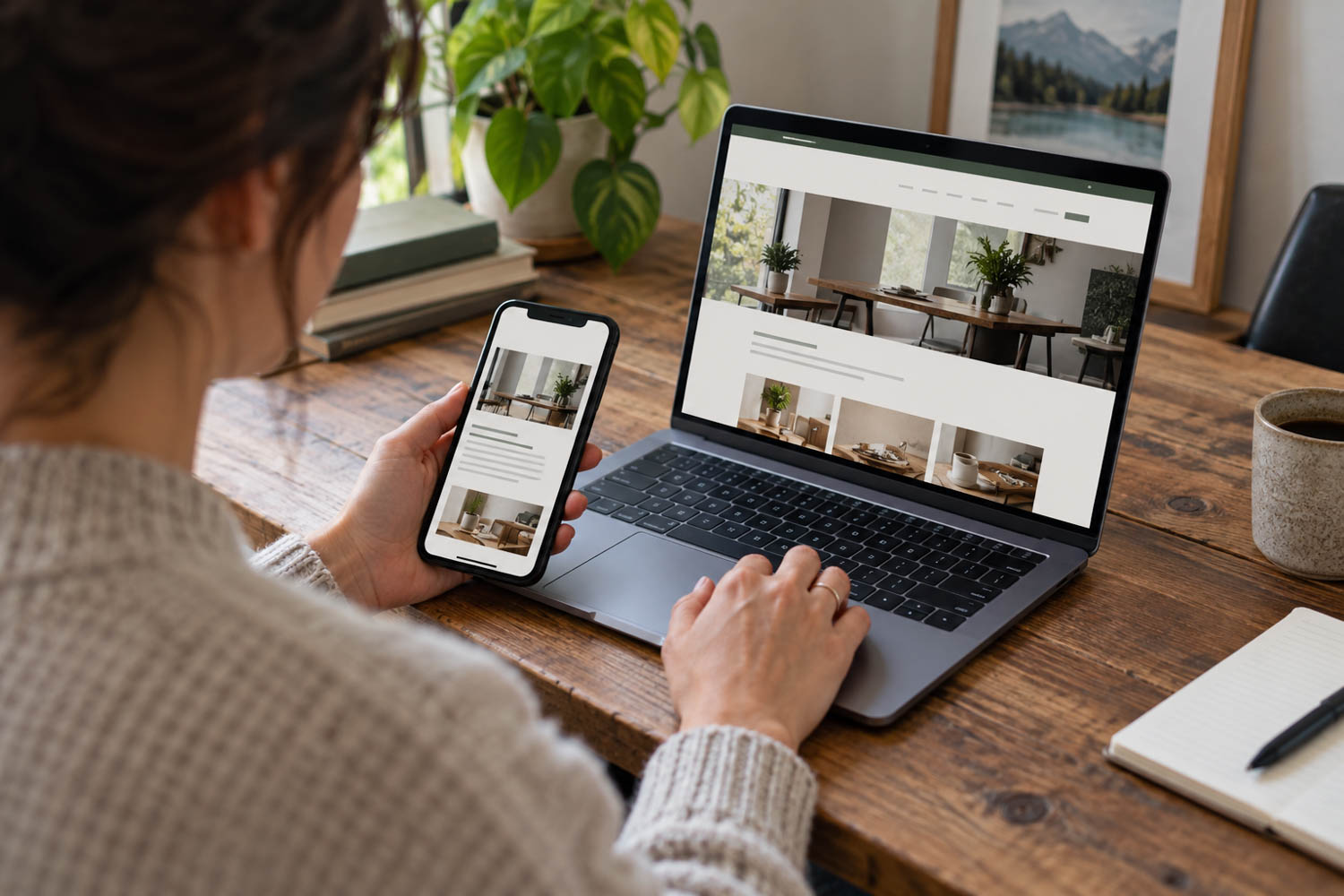
Plan for the visitor using a phone
Picture someone checking your site between appointments or while travelling across the city. Can they read the service details without zooming? Is the contact option obvious? Can they complete the main task with one hand?
Mobile website usability includes forms, menus, buttons and content order. A design can fit on a small screen while still being awkward to use. Ask to review the mobile version during the project, not only after the desktop design is approved.
Test the details that affect your business. A clinic might need a clear appointment link. A contractor might need a manageable photo-upload option. An industrial supplier might need specification documents that remain readable and easy to find.
Design the enquiry around the next conversation
Ask only for the information your team needs to respond usefully. A project enquiry may need a location, service category and short description. It probably does not need every detail required for a final quotation.
The lead capture process should include the form, its confirmation message and the internal handoff. Decide who receives the message, who replies and how missed enquiries are noticed.
Avoid promising a response time your team cannot consistently meet. Give the visitor a realistic next step and an alternative contact route where appropriate. Website enquiry forms need operational ownership as well as a good layout.
Use proof that matches the work you want
A broad claim that your team is experienced is less useful than a relevant project explanation. Describe the original problem, the work completed and any result you can support. Obtain permission before publishing client names, photographs or comments.
For GTA website projects, local details can be helpful when they are real. A case example might explain access constraints in an older Toronto property or a supplier’s delivery requirements in a commercial district. The detail should help a prospective customer understand your capability.
Do not make every page a wall of testimonials. Select proof that answers a likely concern on that page. A service-specific example often earns its place more readily than a general statement repeated throughout the site.
Put launch responsibilities in writing
Agree who supplies content, checks facts and approves launch. Confirm access to hosting and the domain, how existing addresses will be handled, and who tests forms and contact details. Ask what training and ongoing support you receive.
Our guide to the importance of lead capture pages provides more context for reviewing the visitor’s final steps. Include those steps in your launch checklist alongside the design review.
After launch, record the questions visitors still ask and the information your team repeatedly has to explain. Those observations can guide useful improvements without turning every request into a full redesign.
Ready to plan a website around better enquiries?
Bring your current website, main services and the customer questions your team answers most often. We can help you turn them into a clear project brief after your “web design agency Toronto” search. Book a website strategy call.